

If you live in New York City and want to protect your health over the long term, preventive health and longevity medicine should work together as one clinical process.
Preventive health identifies meaningful risks through your history, screening, laboratory results, and medical evaluation. Longevity medicine uses that information to help preserve cardiovascular health, metabolic function, strength, fitness, and independence over time. Primary care keeps the plan connected to your medications, specialists, symptoms, and everyday life. The goal is a clearer understanding of what matters, followed by appropriate action and ongoing review.
Key Takeaways
- Preventive health identifies risks that may affect your future health.
- Longevity medicine turns those risks into a practical plan for protecting health and function over time.
- Advanced diagnostics are useful when they clarify a decision, guide action, or establish a meaningful baseline.
- PrimaryMD connects primary care, precision prevention, diagnostics, and continuous follow-through through a physician-led team in New York City.
What does preventive health do?
Preventive health focuses on identifying and reducing the risk of disease. It includes routine screening, blood pressure management, cardiovascular risk assessment, diabetes prevention, vaccination, medication review, and follow-up when something changes.
It also asks whether a current result deserves attention before it develops into a larger problem. That may involve looking at family history, changes in weight or energy, sleep, exercise, glucose, cholesterol, blood pressure, or other factors that influence long-term risk.
What does preventive care look like in NYC?
For a New Yorker, preventive care has to fit into a demanding and often mobile life. Your care plan may need to account for long workdays, frequent travel, inconsistent sleep, high-intensity exercise, or care received across several Manhattan health systems.
A person working in Midtown may have a different set of practical challenges from someone living downtown, but both need a care plan that can continue between visits and remain useful when circumstances change. Preventive care is most effective when it reflects your actual life rather than a generic checklist.
What does longevity medicine add?
Longevity medicine takes a longer view of health. It considers the factors that influence how well you function over the years ahead, including:
- Cardiovascular fitness
- Metabolic health
- Muscle mass and strength
- Bone density
- Body composition
- Sleep and recovery
- Cognitive and physical function
- Lifestyle sustainability
The distinction is simple:
Preventive health asks which risks should be identified or reduced. Longevity medicine asks how to preserve health, function, and capacity over time.
The two areas overlap, but longevity medicine adds a longer-term focus on trajectory. It considers whether your health is moving in a direction that supports the life you want to lead.
How should preventive health and longevity medicine work together?
The most useful model follows a clear clinical sequence. It begins with context, moves through measurement and interpretation, and ends with a plan that can be followed over time.
How should a physician understand the person first?
Before deciding what to test, a physician should understand your medical history, family history, current symptoms, medications, lifestyle, goals, and priorities.
That context changes how results should be interpreted. A cardiovascular marker may carry different significance for:
- A healthy adult with no family history
- Someone with high blood pressure and a parent who had an early heart attack
- A patient already taking cholesterol medication
- A person whose result has changed substantially from the previous year
The same principle applies to sleep, exercise, body composition, glucose, and hormone-related concerns. A result becomes more useful when it is connected to the person behind it.
Which measurements are worth using?
A preventive and longevity plan may include standard and advanced diagnostics. The right combination depends on the clinical question.
Relevant information may include:
- Blood pressure and cardiovascular risk markers
- Glucose and HbA1c
- Advanced lipid markers when appropriate
- Body composition and bone density
- VO₂ max or other fitness assessments
- Resting metabolic rate
- Sleep and wearable data
- Genetic information when relevant
Before recommending a test, the physician should be able to explain what the result might change. It may help establish a baseline, guide treatment, inform exercise planning, or determine whether follow-up is needed.
PrimaryMD’s personalized diagnostics guide explains how bloodwork and advanced testing can support a health plan when interpreted in context.
How should results become priorities?
A result belongs in the care plan when it is clinically meaningful, relevant to your risk profile, and likely to change what happens next. Elevated blood pressure may warrant repeat monitoring or treatment, ApoB may refine a cardiovascular risk discussion, low aerobic fitness may support a structured exercise plan, and a medication side effect may prompt a treatment review. Other next steps may include improving glucose regulation through exercise, nutrition, sleep, or medication; repeating a marker after an appropriate interval; or coordinating evaluation with a specialist. The appropriate response depends on the result and the person, not on the test alone.
That is where longevity medicine requires clinical judgment. The purpose is to identify the few priorities most likely to improve your health, then follow them over time. Pursuing every abnormal number or available intervention can create activity without meaningful medical benefit. In our piece on optimization theater, we explore how false precision and unnecessary protocols can distract from decisions that actually matter.
How should the plan be followed over time?
A longevity plan should identify what will be measured again, when it will be reviewed, and what would prompt a change.
For example:
- Blood pressure may require more frequent review.
- A metabolic marker may be repeated after a change in exercise or nutrition.
- Body composition may be assessed again after a strength program.
- Fitness may be reassessed after a structured training period.
- A medication plan may change when symptoms, results, or new evidence change.
The important point is continuity. A single result establishes a moment in time. Repeated, purposeful review helps reveal the direction of change.
How can this approach help a New Yorker?
For a New Yorker, preventive and longevity care can respond to different health questions while keeping them connected to one ongoing plan:
- If you have a family history of heart disease: Your physician may review blood pressure, cholesterol, glucose, exercise tolerance, sleep, and medications before deciding whether you need monitoring, treatment, additional testing, or cardiology coordination.
- If your exercise recovery is changing: A physician may consider factors such as anemia, thyroid function, medication effects, sleep, cardiovascular risk, and training load. Exercise physiology can then help translate the findings into a practical plan for training, strength, and recovery.
- If you already see several specialists: Primary care can connect recommendations from cardiology, dermatology, gastroenterology, orthopedics, endocrinology, and other specialties to your medical history, preventive needs, and long-term goals.
For someone living and working across NYC, this continuity matters. Your plan should remain useful as your health, schedule, travel, and family responsibilities change.
Why does the practice structure matter?
Preventive and longevity care requires time to review information, discuss uncertainty, and follow through after decisions are made. The structure of the practice affects whether that work can happen consistently.
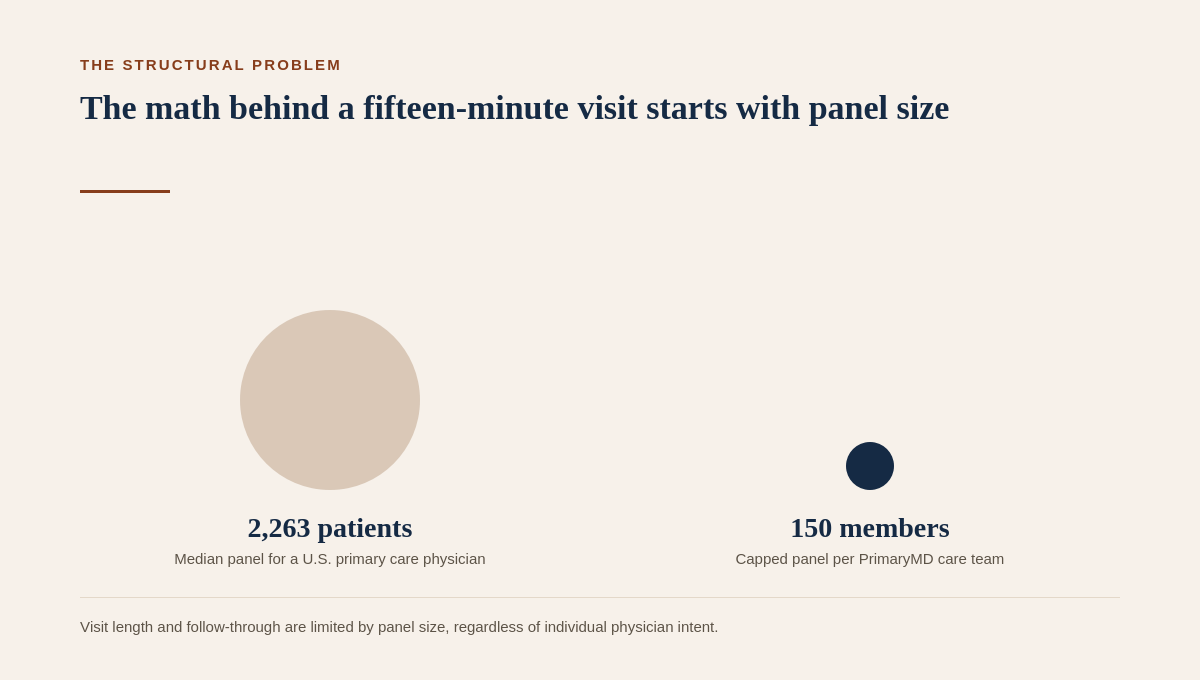
A smaller care team creates more capacity for preparation, continuity, and follow-up. It allows the physician-led team to understand your history, review changes, and keep responsibility for the plan after a result or referral.
The purpose is not exclusivity. It is the clinical capacity required to connect primary care, prevention, diagnostics, and long-term planning.
How does PrimaryMD bring the model together in NYC?
At PrimaryMD, we begin by understanding the member’s history, risks, goals, preferences, and life. We then use conventional and advanced diagnostics when they can improve understanding or support a decision.
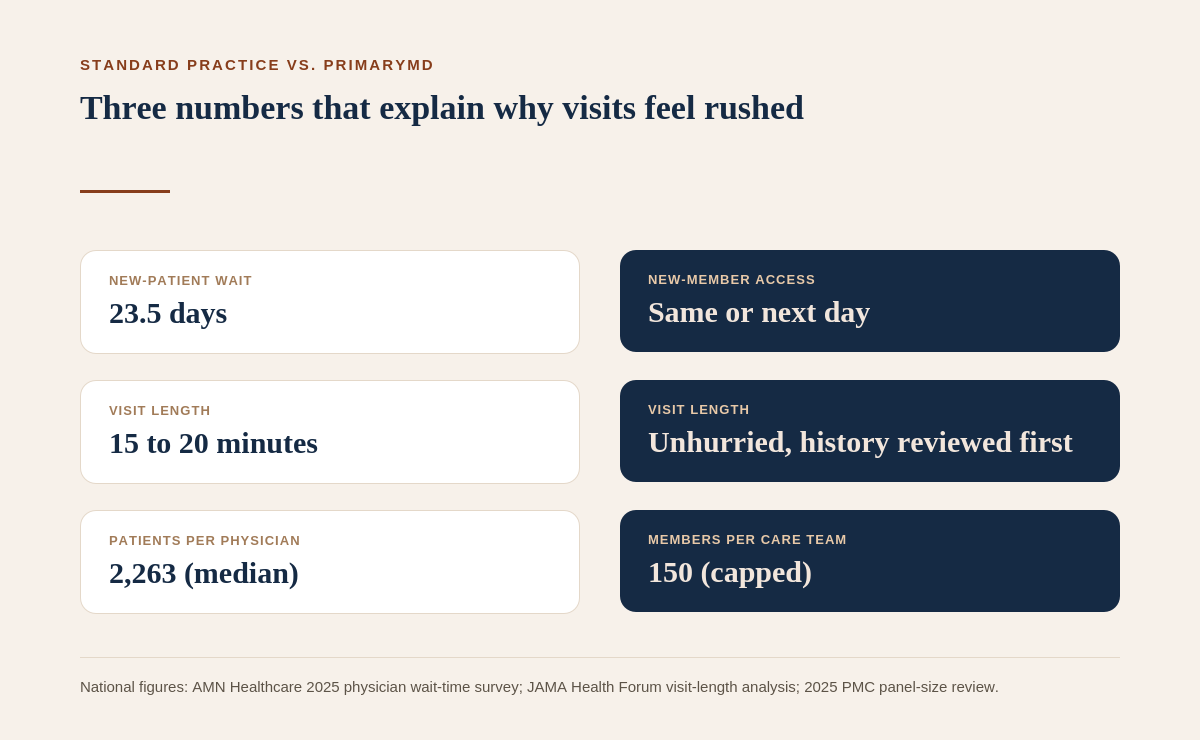
Our physician-led team interprets those findings in context, agrees on priorities with the member, and follows through as health and circumstances change.
Our membership includes comprehensive primary care, recurring clinical review, quarterly blood panels, body-composition and fitness assessments, exercise physiology, wearable-data integration where useful, and specialist coordination. The specific services included in a member’s program should be confirmed with the care team.
Our care model is built around a simple sequence:
- Know the person.
- Measure meaningfully.
- Interpret in context.
- Plan together.
- Act early and selectively.
- Follow continuously.
PrimaryMD has NYC locations at 503 West 35th Street and 430 West Broadway. Our physician-led team includes expertise in internal medicine, emergency medicine, infectious disease, preventive cardiology, longevity medicine, and exercise physiology.
What role do diagnostics play in our model?
Diagnostics create a clearer picture of your health. They do not make decisions on their own.
We may use bloodwork, body-composition testing, fitness assessment, wearable data, or genetic information when the result can clarify risk, guide action, or support monitoring. Sometimes the appropriate decision is to act. Sometimes it is to repeat a marker later. Sometimes it is to leave a finding alone.
The physician-led relationship provides the judgment that connects the measurement to your life.
Who may benefit from this model?
PrimaryMD may suit health-conscious adults in NYC who:
- Want to understand and reduce meaningful health risks
- Have a family history of cardiovascular, metabolic, or other chronic disease
- Already track health data but want clinical interpretation
- Want fitness and metabolic health included in medical planning
- Have several specialists or complex health priorities
- Want to stay ahead without chasing unsupported trends
- Value a long-term physician-led relationship
PrimaryMD is not a one-time testing service or a replacement for health insurance. Insurance remains important for hospital care, procedures, specialist services, medications, and services outside the membership.
What should you ask before joining?
Before choosing a preventive and longevity-focused practice in NYC, ask:
- Who is responsible for my overall care?
- How are advanced tests selected?
- What happens after a result is available?
- How are changes tracked over time?
- Can the practice coordinate with my specialists?
- How does the plan account for work, travel, and personal goals?
- What is included in the membership?
- Which services carry additional costs?
The answers should describe a care process. A test menu alone does not explain how medical decisions will be made or who will follow through.
Conclusion
Preventive health identifies meaningful risks. Longevity medicine turns those risks into a long-term plan for preserving health and function. Primary care keeps that plan medically grounded, connected to the rest of your care, and updated as your life changes.
At PrimaryMD, we bring those elements together through comprehensive primary care, precision prevention, clinically appropriate diagnostics, specialist coordination, and continuous follow-through in NYC.
Learn more about PrimaryMD membership.
Frequently asked questions
Is longevity medicine part of preventive health?
Longevity medicine builds on preventive health. Preventive care focuses on identifying and reducing disease risk, while longevity medicine also considers long-term function, fitness, metabolic health, strength, and healthy aging.
Does longevity medicine mean more testing?
Testing is useful when it can clarify risk, establish a meaningful baseline, guide action, or change monitoring. The appropriate amount of testing depends on your history, goals, and clinical questions.
Can preventive care include exercise and fitness?
Yes. Exercise, strength, cardiorespiratory fitness, recovery, and body composition can all influence long-term health. Exercise physiology can help translate clinical findings into a practical plan.
Can PrimaryMD coordinate with my existing specialists?
Yes. We can review outside records and specialist recommendations and connect them to your broader primary care and prevention plan.
Does PrimaryMD replace health insurance?
No. PrimaryMD provides the physician-led relationship and care strategy. Health insurance remains important for hospitalizations, procedures, specialist care, medications, and services outside the membership.