

If you want to exercise but have a family history of heart disease, you usually do not need to avoid activity. You do need to understand your current risk, choose an appropriate starting point, and know which symptoms should prompt medical evaluation before you increase intensity.
For someone living in New York City, that may mean returning to a gym, joining a running group, training for a race, or building a routine around a demanding work schedule. The right plan depends on your symptoms, medical history, current fitness, medications, and goals.
What are the key takeaways?
- A family history of heart disease should prompt a clearer risk discussion, not automatic restriction from exercise.
- Most adults can begin or increase activity gradually after considering symptoms, cardiovascular risk factors, and current fitness.
- Chest pressure, fainting, unusual shortness of breath, palpitations, or a sudden change in exercise tolerance deserve medical attention.
- A physician can help determine whether you need monitoring, treatment review, testing, or specialist evaluation before increasing intensity.
How should you check your family history?
Start by asking whether a parent, sibling, or other close relative had a heart attack, stroke, cardiomyopathy, valve disease, an abnormal rhythm, or sudden cardiac death. Record the age at diagnosis or death, since heart disease occurring at a younger age may provide more significant information about inherited risk. Also ask whether relatives had very high cholesterol, high blood pressure, diabetes, or a known genetic condition. Share what you learn with your physician so it can be considered alongside your blood pressure, cholesterol, glucose, smoking history, symptoms, and current activity. CDC family-history guidance
A family history is one part of a risk assessment. It does not determine whether you can exercise or predict exactly what will happen to your health.
Should you speak with a physician before increasing exercise?
Many adults can begin with light or moderate activity and progress gradually. A medical discussion becomes especially important if you have:
- A strong family history of early heart disease
- Known high blood pressure, high cholesterol, or diabetes
- A personal history of heart or vascular disease
- Chest discomfort or unusual shortness of breath
- Fainting, near-fainting, or palpitations
- A long period of inactivity followed by plans for vigorous exercise
- A significant decline in exercise tolerance
At PrimaryMD, we review the reason you want to exercise, your current level of activity, your medical history, medications, symptoms, and goals before recommending a next step. That may involve beginning with a gradual plan, reviewing existing results, or arranging further evaluation.
What does normal exertion feel like?
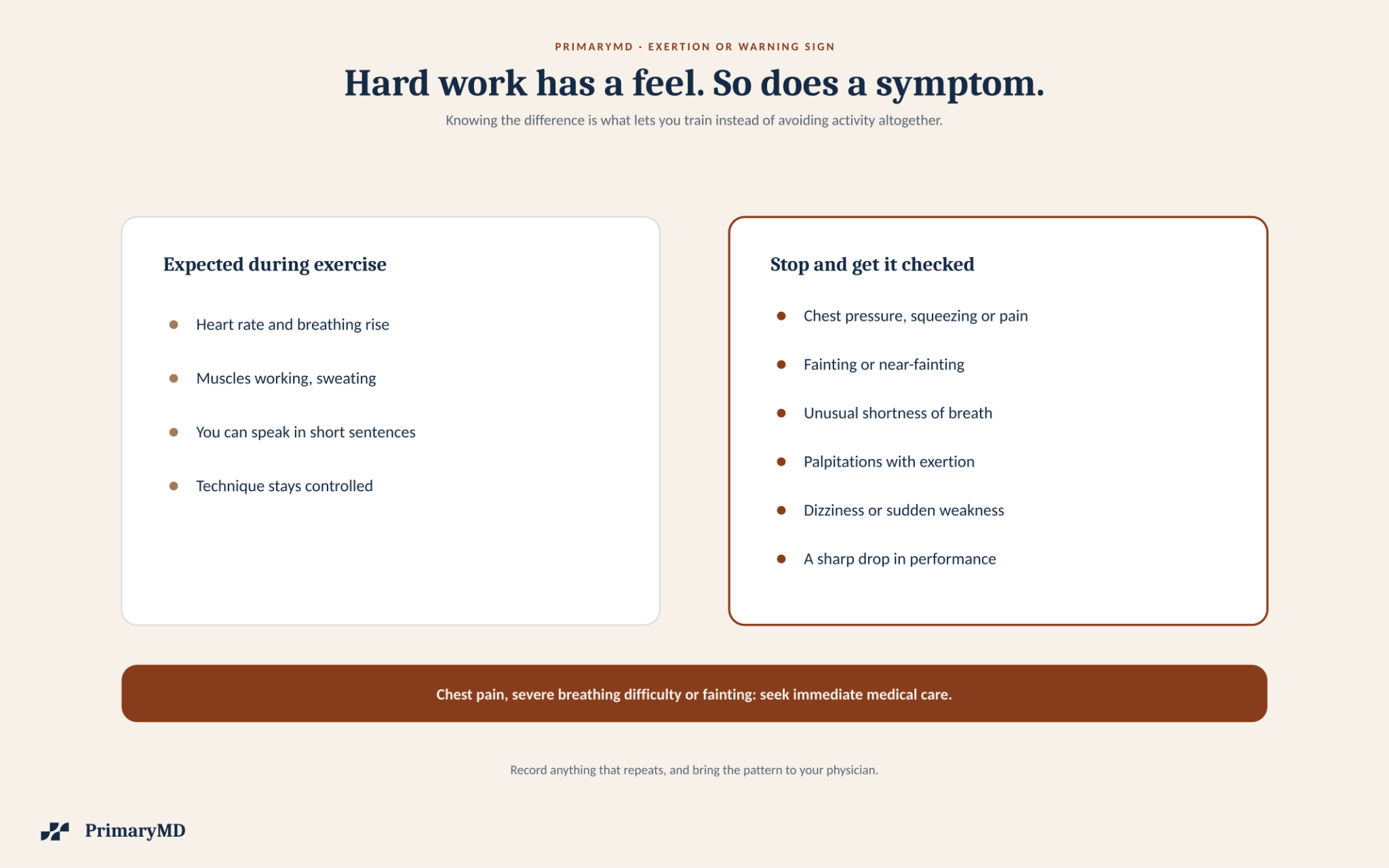
Exercise normally raises your heart rate and breathing. You may sweat, feel your muscles working, and need to breathe more heavily during a challenging interval or strength set.
Moderate aerobic effort usually allows you to speak in short sentences while breathing more heavily. During strength training, you should be able to maintain control and consistent technique through the set.
Symptoms that deserve attention include:
- Chest pressure, squeezing, or discomfort
- Fainting or near-fainting
- Unusual shortness of breath
- Palpitations that occur with exertion
- Dizziness or sudden weakness
- A sharp or unexplained decline in performance
- Fatigue that persists well beyond the workout
If you experience severe breathing difficulty, chest pain, fainting, or symptoms that do not improve with rest, seek immediate medical care.
How should you use heart rate, effort, and recovery?
Heart rate can help you understand how your body responds to exercise, but the number needs context. Medications, sleep, stress, illness, dehydration, temperature, and caffeine can all affect it.
Perceived effort is also useful. If an easy workout suddenly feels difficult, your heart rate remains unusually elevated, or you need much longer to recover from a familiar session, record the change and consider discussing it with a physician.
Wearables may help identify trends in resting heart rate, sleep, training load, and recovery. They do not diagnose heart disease. PrimaryMD’s guide to VO₂ max testing and wearable data explains why consumer estimates and laboratory measurements can differ.
How can you start exercising in NYC?
The best starting point depends on your current fitness and the activity you want to pursue. A first month might look like this:
What could weeks one and two look like?
Begin with two short, full-body strength sessions and two moderate aerobic sessions. Use manageable resistance and leave several controlled repetitions in reserve. Keep the focus on technique, breathing, and learning how your body responds.
What could weeks three and four look like?
If recovery has been steady and no concerning symptoms have appeared, add a small amount of resistance, time, or intensity. Increase one variable at a time. A person returning to running might add short, controlled intervals. Someone returning to a gym might add a set or modestly increase the load.
This framework can adapt to NYC routines. You might use an apartment gym before work, a commercial gym near your office, a structured class through Shape Up NYC, or an indoor facility during a busy travel week. The location matters less than having a plan you can repeat.
Why should strength and aerobic training work together?
Aerobic training supports cardiovascular fitness. Strength training supports muscle, bone, joint stability, and the ability to produce force. Combining them creates a broader foundation for health and activity.
The CDC recommends at least 150 minutes of moderate-intensity aerobic activity each week and muscle-strengthening activity on at least two days. Those targets provide a general framework. Your starting point may be lower if you are returning after years away, managing a medical condition, or recovering from an injury.
The appropriate plan may involve two strength sessions, two aerobic sessions, or shorter sessions distributed across the week. The structure should reflect your health, schedule, and goal.
When might an ECG or additional testing be appropriate?
Testing should follow a clinical question. An ECG may be useful when symptoms, an examination finding, a personal history, or a family history raises concern about the heart’s rhythm or function. Exercise testing or other cardiac evaluation may be appropriate in selected situations.
New York City is also home to important developments in cardiac technology. In 2026, researchers at NewYork-Presbyterian and Columbia announced FDA clearance for EchoNext, an AI tool that analyzes standard ECGs to identify people who may have a higher likelihood of structural heart disease. The tool is intended to help clinicians determine who may need follow-up echocardiography. It does not mean every New Yorker needs an ECG, AI analysis, or an echocardiogram. NYP and Columbia’s announcement
At PrimaryMD, we consider the reason for testing, the information already available, and whether a result would change your care before recommending additional evaluation.
How can exercise physiology add useful context?
If your goal involves endurance, performance, recovery, or a return to structured training, exercise physiology can add information beyond a standard office visit.
Heather Milton, MS, PrimaryMD’s Lead Exercise Physiologist, has experience in clinical exercise physiology, diagnostic cardiology, strength and conditioning, metabolic assessment, and performance testing. She can help interpret exercise findings in relation to your goals, training history, recovery, and symptoms.
The clinical decision remains with the physician. Exercise physiology can help translate that decision into practical guidance about intensity, progression, strength, and recovery.
What should you remember before increasing exercise?
A family history of heart disease deserves attention, but it does not define your exercise future. Start with your personal risk factors, symptoms, current fitness, and goals. Increase activity gradually and pay attention to changes that fall outside expected exertion.
PrimaryMD can help you determine whether you are ready to progress, whether existing information is enough to begin, or whether further evaluation should come first. The purpose is a clear exercise plan that supports your health and fits your life in New York City.
Frequently asked questions
Can exercise prevent heart disease if it runs in my family?
Regular physical activity can support cardiovascular health and help address modifiable risk factors such as blood pressure, blood sugar, fitness, and body composition. It does not eliminate inherited risk, which should be considered alongside other preventive measures.
Do I need an exercise stress test before starting a workout program?
Not automatically. The decision depends on your symptoms, medical history, risk factors, current fitness, and the intensity you plan to pursue. A physician can help determine whether testing would add useful information.
Is it safe to exercise with high blood pressure or high cholesterol?
Many adults with these conditions can exercise safely, but the plan should reflect how well the condition is controlled, what medications you take, and whether you have symptoms. Discuss a new or more intense program with your physician.
Can I use a smartwatch to monitor my heart during exercise?
A smartwatch can help you observe trends in heart rate and activity, but it cannot diagnose heart disease or replace medical evaluation. New symptoms require attention regardless of what the device reports.
Does PrimaryMD membership replace health insurance or emergency care?
No. Membership does not replace health insurance, hospital care, or emergency treatment. Chest pain, severe shortness of breath, fainting, or other urgent symptoms require immediate medical attention.