

NYC air pollution can contribute to coughing, throat irritation, wheezing, shortness of breath, and reduced exercise tolerance. For adults who run, cycle, walk extensively, or spend much of the day near traffic, recurring symptoms may deserve more attention than simply blaming poor fitness, seasonal allergies, or a demanding schedule.
The issue is especially relevant for adults with asthma, allergies, cardiovascular disease, or a history of respiratory symptoms. Understanding when and where symptoms occur can help determine whether air pollution may be contributing and whether a medical evaluation is appropriate.
Key Takeaways
- NYC air pollution comes from several sources, including ozone, fine particles, traffic, construction, building heating systems, and commercial activity.
- Exposure can affect respiratory symptoms, asthma control, cardiovascular health, and exercise tolerance.
- Small changes involving timing, route choice, activity level, and indoor air can reduce unnecessary exposure.
- At PrimaryMD, our physicians review symptoms alongside medical history, medications, allergies, exercise habits, and cardiovascular risk to determine whether monitoring, treatment review, testing, or specialist care is appropriate.
Which pollutants affect daily life in NYC?
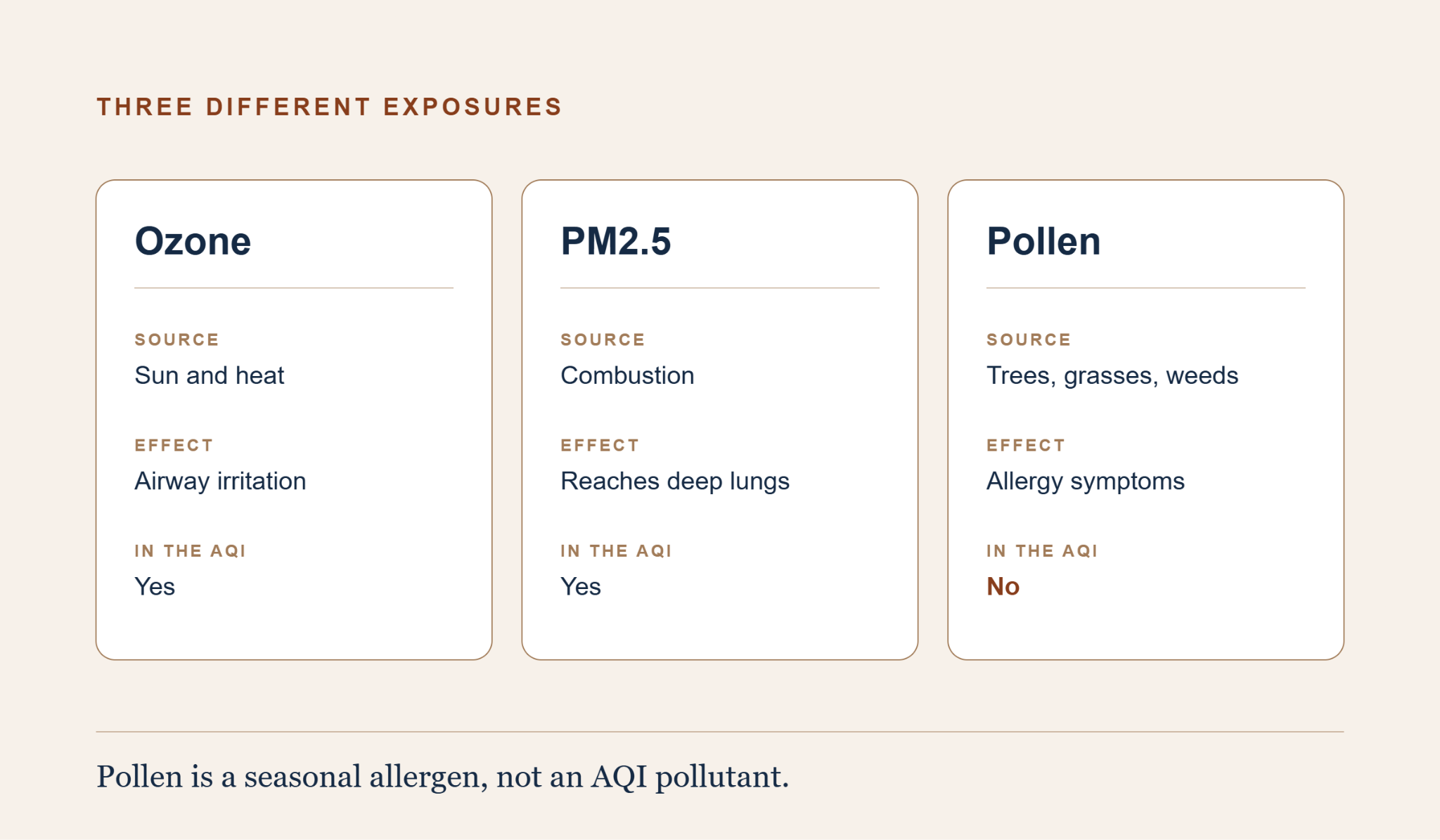
Several different exposures can affect the air New Yorkers breathe, and each one has a different health impact. Ozone tends to rise during hot, sunny weather, while fine-particle pollution comes from combustion sources such as traffic, construction, building heating systems, and commercial cooking. Seasonal pollen creates a separate set of allergy and asthma triggers. Understanding the difference helps explain why symptoms may appear in one setting or season and improve in another.
What does ozone do?
Ground-level ozone tends to increase during warm, sunny weather. It can irritate the airways and contribute to coughing, wheezing, throat irritation, and shortness of breath.
Adults with asthma or other lung conditions may be more sensitive to ozone. Healthy adults who exercise or work outdoors for long periods can also notice symptoms when levels are elevated.
What is PM2.5?
PM2.5 refers to fine particulate matter, consisting of particles small enough to travel deep into the lungs. In NYC, common sources include traffic, construction, building heating systems, commercial cooking, and other combustion-related activity.
The NYC Health Department estimates that ozone and PM2.5 contribute to approximately 2,400 deaths annually, along with emergency visits and hospitalizations related to asthma, heart, and lung conditions. The city’s Community Air Survey also tracks air-quality differences across neighborhoods, where traffic patterns, building density, construction, weather, and local sources can affect the air around a particular home, workplace, or walking route. NYC Health Department
How is pollen different from air pollution?
Pollen is a seasonal allergen rather than an AQI pollutant. Trees, grasses, and weeds release pollen during different parts of the year, which can cause sneezing, congestion, itchy eyes, postnasal drip, coughing, and asthma symptoms. Pollen and air pollution can overlap, so a person may react to seasonal allergies, ozone, traffic-related pollution, or several triggers at the same time. The timing and pattern of symptoms can help a physician determine what deserves further evaluation.
How can air pollution affect your health?
Can pollution worsen asthma or allergies?
Air pollution can irritate the airways and make existing respiratory conditions more difficult to control. Adults may notice coughing during or after outdoor activity, wheezing, chest tightness, shortness of breath, or more frequent allergy symptoms.
Asthma symptoms may worsen with ozone, pollen, cold air, exercise, or other environmental triggers. The NYC Health Department’s asthma guidance recommends following prescribed treatment and avoiding known triggers.
At PrimaryMD, our physicians review symptoms alongside medication use, allergy history, exercise habits, and environmental patterns. A recurring need for rescue medication, disrupted sleep, or reduced activity may justify a treatment-plan review or coordination with an allergy or pulmonary specialist.
Can pollution affect cardiovascular health?
Fine-particle pollution has been associated with cardiovascular effects, particularly among people with existing heart disease or other risk factors. Pollution can also make strenuous activity feel more difficult by irritating the lungs and increasing the work required to breathe.
Symptoms that deserve medical attention may include:
- Shortness of breath with less exertion than usual
- Chest pressure or discomfort
- Dizziness or fainting
- Unusual fatigue
- Palpitations
- A persistent decline in exercise tolerance
A single difficult workout can reflect heat, dehydration, poor sleep, stress, or a change in training. Repeated changes deserve a closer look, especially when they occur with chest symptoms, dizziness, or reduced tolerance for ordinary activity.
At PrimaryMD, our physicians consider when symptoms occur, how long they last, whether they repeat in particular environments, and whether they occur alongside other warning signs. Blood pressure, cholesterol, glucose, family history, and prior results may also inform the next step.
How can you reduce exposure without changing your life?
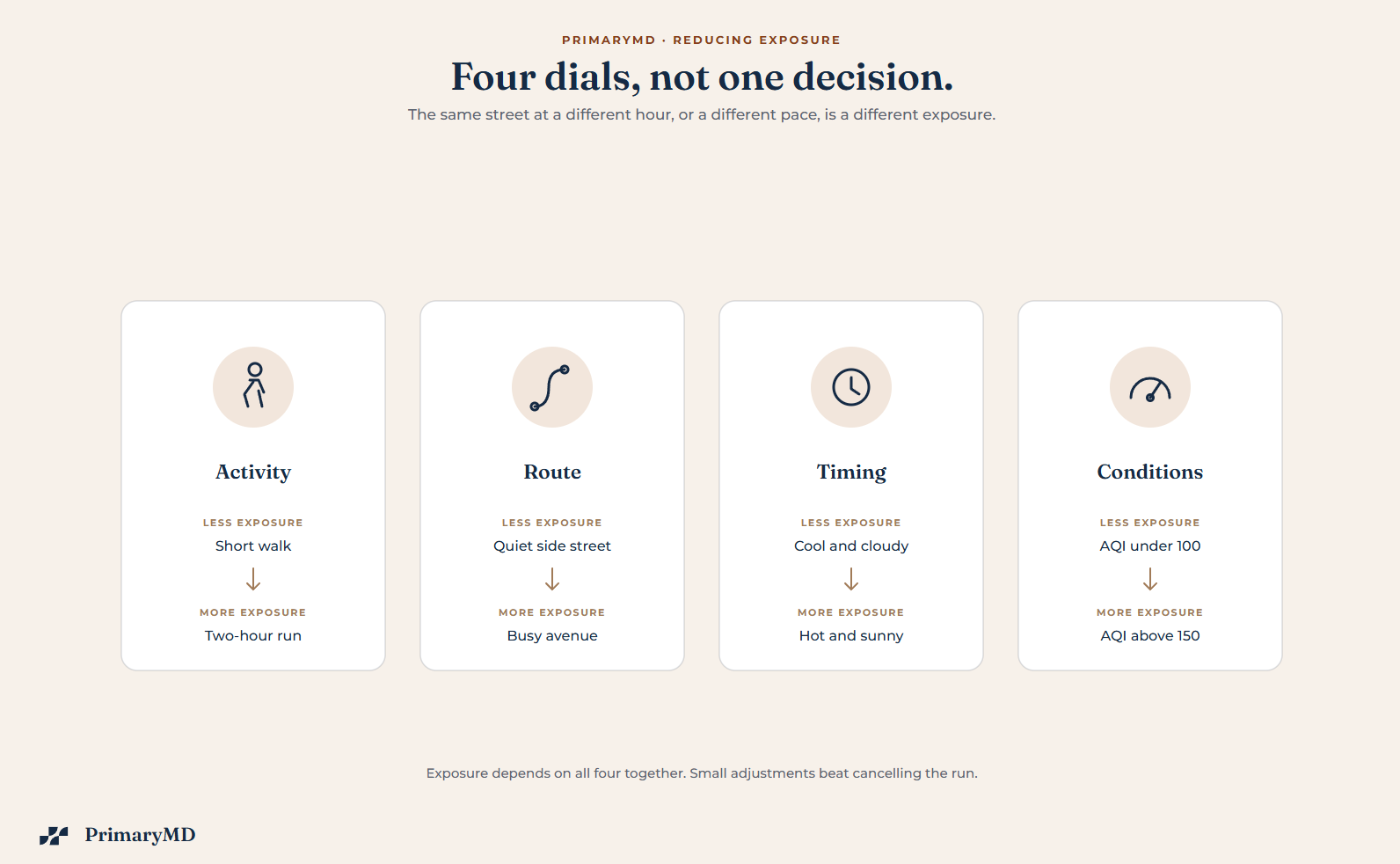
The most useful choices depend on where you spend time, how intensely you are breathing, the current air-quality conditions, and your medical history.
What can you do before spending time outdoors?
Check the current AQI through AirNow before planning a long commute, outdoor workout, or extended time near traffic.
Then consider the activity and the conditions together. A short walk and a two-hour run create different levels of exposure. A quiet park route may also differ from a route beside a major avenue.
NYC’s general guidance recommends:
- AQI 0 to 50: Outdoor activity is generally appropriate.
- AQI 51 to 100: Most people can continue normal activity, while sensitive individuals should monitor symptoms.
- AQI 101 to 150: Sensitive individuals should reduce strenuous or prolonged outdoor activity.
- AQI above 150: Everyone should limit strenuous outdoor activity and consider moving indoors.
Weather also matters. Ozone tends to rise during warm, sunny conditions, and heat can make breathing and exercise feel more difficult.
Can changing your route make a difference?
Traffic-heavy streets, major intersections, tunnels, loading zones, and idling vehicles can increase exposure to combustion-related pollution. When practical, choose quieter streets, parks, or routes farther from stationary and moving traffic.
This can be a realistic adjustment rather than a major lifestyle change. Someone who walks 20 minutes to work might take a parallel residential street. Someone who runs along a congested avenue might choose a park loop or exercise indoors when conditions are poor.
How can you improve indoor air?
Indoor air can be affected by outdoor pollution, cooking fumes, smoking, candles, poor ventilation, mold, dust, and household products. Practical steps include:
- Keeping windows closed when outdoor air quality is poor
- Using air conditioning with the fresh-air intake closed when appropriate
- Replacing HVAC filters according to the manufacturer’s instructions
- Using a properly sized, non-ozone-producing air cleaner
- Avoiding smoking, candles, and activities that create heavy indoor fumes
- Noticing whether symptoms improve in one building or location
If you regularly feel worse in a particular apartment, office, or gym, that pattern is worth discussing with a physician.
When should you discuss symptoms with a physician?
A medical evaluation may be appropriate when symptoms are new, progressively worsening, repeated during similar activities, present on days with better air quality, or interfering with sleep and normal activities.
You should also discuss symptoms if you are using prescribed rescue medication more frequently or find yourself reducing ordinary activity because of breathing difficulty.
A physician may review your medical history, medications, allergies, blood pressure, heart and lung examination, and exposure pattern. Depending on the findings, the next step could involve monitoring, treatment adjustment, pulmonary testing, cardiac evaluation, or specialist referral.
How can you track whether NYC air pollution is affecting you?
A simple record can make recurring symptoms easier to interpret. Note:
- The date and time symptoms occur
- Your location
- The activity you were doing
- The AQI and weather
- Whether traffic, construction, pollen, or indoor conditions were present
- How long symptoms lasted
- Whether they improved after going indoors
- Any medication you used
- Associated symptoms such as chest pressure, dizziness, or palpitations
For patients who exercise regularly, performance and recovery trends can provide useful context. Wearables may identify a change worth discussing, while clinical evaluation determines what the change means. PrimaryMD’s guide to VO₂ max testing and wearable data explains why consumer estimates and laboratory measurements can differ.
What should New Yorkers remember about air pollution?
Living in NYC involves regular exposure to traffic, buildings, construction, weather changes, and seasonal allergens. Small changes to routes, timing, activity level, and indoor air can reduce unnecessary exposure.
Recurring symptoms deserve context. Air pollution, pollen, allergies, asthma, heat, cardiovascular risk, and training load can overlap. PrimaryMD helps adults connect those patterns to their medical history and determine whether the next step is exposure reduction, treatment review, monitoring, testing, or specialist care.
Frequently asked questions
Can NYC air pollution affect people without asthma?
Yes. Anyone may experience eye, throat, or airway irritation during poor-air-quality conditions. People with asthma, heart disease, or other medical conditions may experience effects at lower exposure levels.
Is pollen included in the AQI?
No. The AQI measures pollutants such as ozone and PM2.5. Pollen is a separate seasonal trigger that can contribute to allergy and asthma symptoms.
Can air pollution cause long-term health problems?
Long-term exposure to air pollution is associated with respiratory and cardiovascular health risks. Individual risk depends on the type and duration of exposure, medical history, smoking status, and other factors.
What should I track before discussing symptoms with a physician?
Record when symptoms occur, where you are, what activity you are doing, the weather and AQI, how long symptoms last, and whether they improve indoors. Note any medication use and associated symptoms such as chest pressure, dizziness, or palpitations.
How can I reduce air-pollution exposure if I live or work near heavy traffic?
Choose quieter routes when practical, avoid standing near idling vehicles, keep indoor filters maintained, and check air-quality conditions before prolonged outdoor activity. If symptoms continue despite these changes, discuss the pattern with a physician.
When do air-quality symptoms require urgent care?
Severe trouble breathing, chest pain, fainting, confusion, or symptoms that do not improve with prescribed treatment require immediate medical attention. For recurring but less severe symptoms, schedule a medical evaluation to review the pattern and possible causes.