
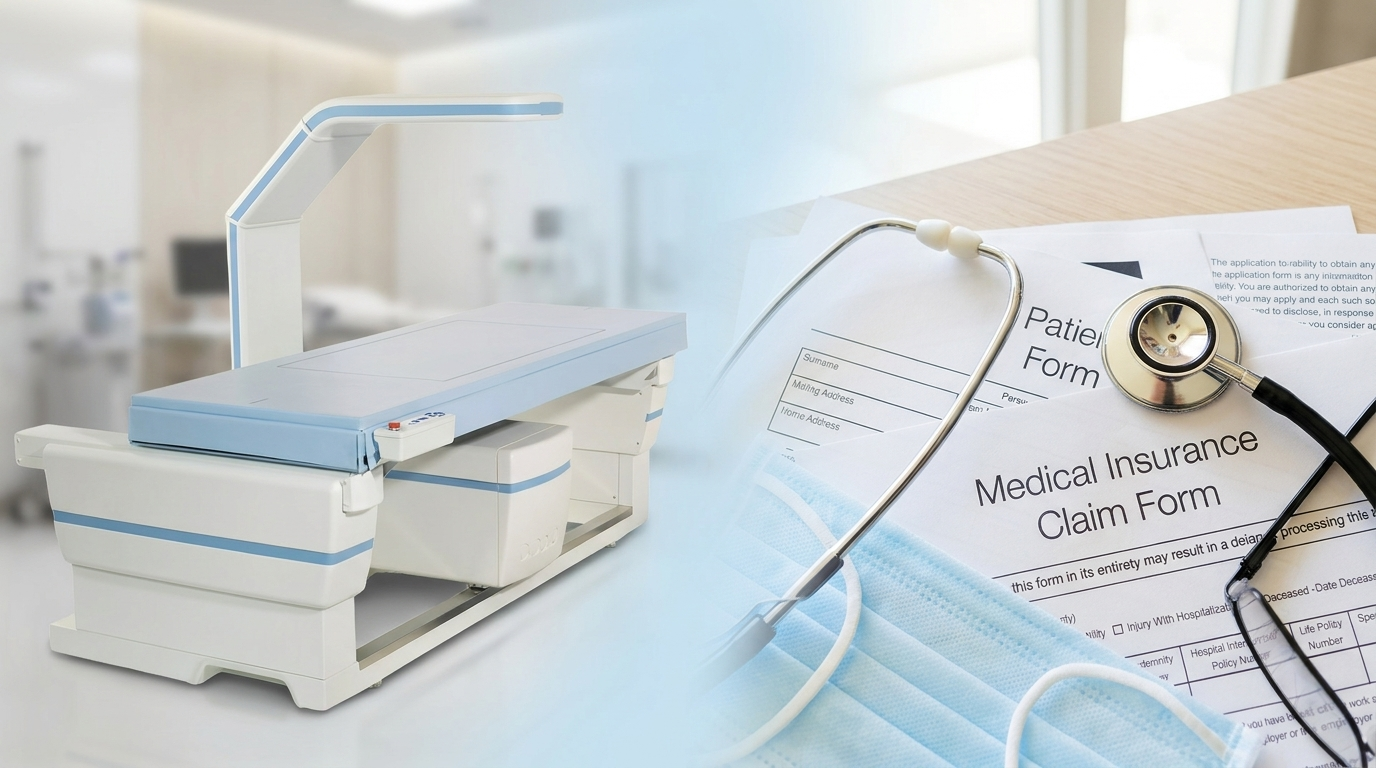
A DEXA scan is not covered or denied simply because it uses DEXA technology. Coverage usually depends on the reason for the scan: bone density testing is treated differently from body composition testing.
Executive Summary
- A DEXA scan is more likely to be covered when it is ordered for bone density testing, osteoporosis screening, fracture-risk evaluation, or treatment monitoring.
- Body composition DEXA is usually treated differently. Scans for body fat percentage, visceral fat, lean mass, GLP-1 muscle retention, weight-loss progress, or longevity baselines are often considered elective or self-pay.
- The difference is not the scanner but clinical indication. Bone density DEXA is tied to recognized medical screening and diagnosis, while body composition DEXA is often used for planning and monitoring.
- Before booking, ask whether the scan is being billed as bone density testing or body composition testing. Also ask about the CPT code, diagnosis code, network status, prior authorization, deductible, and whether body composition data is included.
Bone Density DEXA vs Body Composition DEXA
Bone density DEXA is used to assess bone mineral density, usually at the hip and spine. It helps identify low bone density, osteopenia, osteoporosis, and fracture risk. This is the version of DEXA most commonly discussed in medical guidelines and insurance policies.
Body composition DEXA measures a different set of findings. It can estimate total body fat percentage, fat mass, lean mass, fat distribution, and visceral fat. These results can be useful for people tracking weight loss, GLP-1 therapy, muscle preservation, training progress, menopause-related changes, or metabolic risk.
The coverage difference comes from the question being asked. Bone density DEXA is usually tied to a recognized diagnostic or preventive medical indication. Body composition DEXA often helps guide decisions about weight loss, muscle preservation, visceral fat, and training. Insurers may still treat those uses as wellness or elective unless they are tied to a covered diagnosis.
When Bone Density DEXA May Be Covered
Bone density DEXA may be covered when a clinician orders it for osteoporosis screening, fracture-risk evaluation, or monitoring known bone loss. Common qualifying situations include older age, postmenopausal fracture risk, prior low-trauma fracture, long-term corticosteroid use, known osteopenia or osteoporosis, and medical conditions or medications that affect bone health.
Medicare Part B covers bone mass measurements for qualifying patients, generally once every 24 months, or more often when medically necessary. Private insurance plans often use similar logic, but plan rules vary. Some scans may be covered as preventive screening, while others may be billed as diagnostic testing depending on the patient’s history and the reason for the order.
Current screening guidance supports osteoporosis screening for women age 65 and older and for postmenopausal women younger than 65 who are at increased fracture risk. For men, formal screening guidance is less settled, but a history of fracture, low bone density, or other risk factors may still justify evaluation. Insurance coverage depends on the plan’s criteria, not only on whether a scan seems clinically reasonable.
Why Body Composition DEXA Is Often Not Covered
Body composition DEXA is often not covered because insurers may treat it as wellness, fitness, or elective testing rather than a medically necessary diagnostic service. That can be frustrating because the reasons people use body composition DEXA are often clinically relevant. Someone taking a GLP-1 may want to know whether weight loss is coming from fat or lean mass. Someone with normal BMI but cardiometabolic risk may want to understand visceral fat. Someone entering menopause may want a clearer baseline for muscle, fat distribution, and bone health. These are real health questions, but they do not always fit the way insurance plans define coverage. Not covered does not mean not useful. It means the scan may need to be paid for outside insurance.
Does a Doctor’s Order Guarantee Coverage?
Unfortunately, a doctor’s order does not guarantee insurance coverage. It may be required for the scan to be billed medically, but the claim still depends on how the scan is coded, whether the indication is covered, where the scan is performed, and whether your plan requires prior authorization.
Before booking, ask whether the scan is being ordered as a bone density study, a body composition study, or both.
What to Ask Before Booking a DEXA Scan
Before scheduling, ask the ordering clinician or imaging center what type of DEXA scan is being ordered. A bone density scan and a body composition scan may produce different reports, use different billing logic, and create different expectations for insurance coverage.
Ask the imaging center what CPT code will be billed, what diagnosis code will be attached, whether the facility is in-network, and whether prior authorization is required. Also ask whether the scan will be billed as preventive, diagnostic, or elective. Those categories can affect deductible, copay, coinsurance, and whether the claim is paid at all.
Is DEXA Covered by Medicare?
Medicare Part B covers bone mass measurements for qualifying patients when the scan is ordered to evaluate bone density, detect bone loss, or monitor osteoporosis treatment. If coverage criteria are met and the provider accepts Medicare assignment, you pay nothing for the test.
Medicare generally covers this testing once every 24 months, or more often when medically necessary. This coverage applies to bone mass measurement under Medicare rules. It should not be assumed to cover DEXA scans performed for body composition, weight-loss tracking, muscle monitoring, or longevity planning.
Is DEXA Covered by Private Insurance?
Private insurance coverage varies by plan. Many plans cover bone density testing when it is medically indicated, especially when the patient meets age-based or risk-based criteria. Coverage may depend on whether the scan is preventive or diagnostic, whether the imaging center is in-network, and whether prior authorization is required.
Body composition DEXA is less predictable. Some plans may cover testing in narrow circumstances, but many treat it as self-pay when the purpose is body fat, lean mass, visceral fat, fitness, weight loss, or wellness tracking. The same person may have coverage for a DEXA ordered to evaluate bone density but not for a DEXA ordered to measure body composition.
Can You Use HSA or FSA Funds for a DEXA Scan?
Many patients use HSA or FSA funds to pay for DEXA scans, especially when the scan is not covered by insurance. This can reduce the effective cost because the scan is paid with pre-tax dollars. Eligibility can depend on your plan administrator and how the service is documented, so it is worth confirming before assuming reimbursement.
This is where the existing cost question and coverage question overlap. Insurance may not pay for a body composition scan, but tax-advantaged health funds may still make the out-of-pocket cost more manageable. For a fuller breakdown of self-pay pricing and HSA/FSA strategy, see PrimaryMD’s DEXA scan cost guide.
If Body Composition DEXA Is Not Covered, Is It Still Worth Considering?
It is easier to justify paying out of pocket when the scan answers a decision you are already prepared to act on. If the result will change training, nutrition, medication monitoring, metabolic testing, or follow-up timing, the scan has a clearer purpose. If it will only give you another number to track, it may be less useful.
For example, a person losing weight may use DEXA to check whether lean mass is being preserved. Someone with normal BMI but elevated metabolic risk may use it to better understand visceral fat. A person entering menopause may use DEXA to establish a clearer baseline for bone, muscle, and fat distribution. These uses may not always be reimbursed, but they can still be clinically meaningful.
How PrimaryMD Uses DEXA in Proactive Care
At PrimaryMD, the question is not only whether a DEXA scan is reimbursed. The more important question is whether the result belongs in the patient’s care plan. A scan may be reviewed alongside biomarkers, cardiometabolic risk, VO2 max, medications, family history, symptoms, and goals so the physician can decide whether the finding calls for action, monitoring, or further evaluation.
Frequently Asked Questions
Is a DEXA scan covered by insurance?
A DEXA scan may be covered when it is ordered for bone density screening, osteoporosis evaluation, fracture-risk assessment, or treatment monitoring. Coverage is less likely when the scan is ordered only for body composition, fitness tracking, or wellness purposes.
Is a DEXA scan for body fat covered by insurance?
Usually not. A DEXA scan ordered to measure body fat, lean mass, or visceral fat is often treated as elective testing unless it is connected to a covered medical indication. Many body composition DEXA scans are paid out of pocket.
Is a bone density DEXA covered by Medicare?
Medicare Part B covers bone mass measurements for qualifying patients, generally once every 24 months, or more often when medically necessary. If coverage criteria are met and the provider accepts Medicare assignment, patients typically pay nothing for the test.
Why would insurance cover bone density but not body composition?
Insurance coverage usually follows medical necessity. Bone density DEXA is tied to osteoporosis screening, fracture-risk evaluation, and treatment monitoring. Body composition DEXA may help guide health decisions, but insurers often classify it as wellness or elective testing when it is not tied to a covered diagnosis.
Does a doctor’s order guarantee DEXA coverage?
No. A doctor’s order may be required, but coverage still depends on the indication, diagnosis code, billing code, facility, network status, prior authorization rules, and the patient’s specific insurance plan.
Can I use HSA or FSA funds for a DEXA scan?
Often, yes, but documentation rules can vary by plan. Many patients use HSA or FSA funds when insurance does not cover body composition DEXA, especially if the scan is part of a health-related evaluation or care plan.