
Body composition & performance
Measure what is changing. Build for what matters.
PrimaryMD combines DEXA body-composition scans, VO₂ max and resting-metabolic-rate testing with physician review and exercise physiology. Results are read alongside your history, labs, medications, symptoms, wearable trends and goals, then translated into a plan that can change as you do.
DEXA
fat mass, lean mass and bone measures
VO₂ max
cardiorespiratory fitness
RMR
measured resting energy use
What is included
What does body composition and performance care include?
Testing establishes a baseline. The value comes from reading each result in context, choosing a practical next step, and returning to the measures that can show meaningful change.
DEXA assessment of total and regional fat mass, lean mass and bone measures
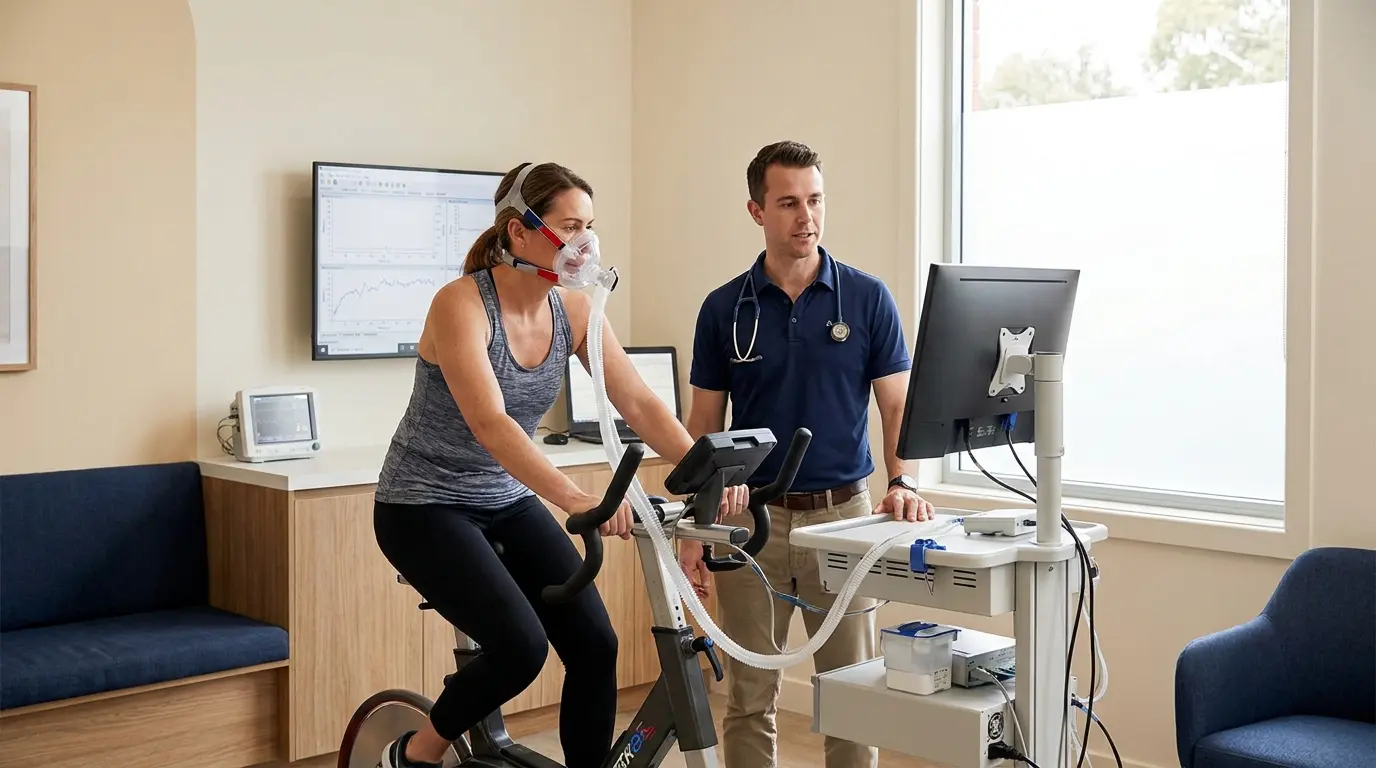
VO₂ max testing to assess cardiorespiratory fitness
Resting metabolic rate testing to measure energy use at rest
Grip strength and other functional measures selected for your health context and goals
Exercise physiology guidance informed by your results, history, current training and constraints
Wearable and continuous glucose monitor integration when the data can clarify a trend or support a decision
These assessments are included within PrimaryMD membership. Testing schedules depend on clinical appropriateness, prior results and goals. Additional imaging, laboratory work or specialty evaluation may carry separate costs.
From data to direction
How does a measurement become a plan?
No single score defines health or performance. The team establishes a consistent baseline, decides which findings deserve action, and follows the measures most likely to show whether the plan is helping.
Signals in context
DEXAVO₂ maxRMRFunctional measuresSymptoms and trends
Continue, adjust, investigate, or leave the plan aloneThen measure again only when it can answer a real question
| Signal | What it can show | How it informs the next step |
|---|---|---|
| DEXA | Fat and lean-mass distribution, visceral-fat estimates and bone measures | May guide resistance training, nutrition review, weight-management goals or further clinical evaluation |
| VO₂ max | How effectively the body uses oxygen during increasing exercise demand | May inform aerobic training intensity, progression, recovery planning, or further clinical evaluation when symptoms or results warrant it |
| RMR | Energy used by the body at rest under test conditions | Gives nutrition and weight-management discussions a measured baseline rather than a calculator estimate |
| Functional measures | Grip strength and other selected measures of current capacity | May guide strength priorities, progression and future reassessment |
| Wearables and symptoms | Patterns in activity, sleep, recovery and how you feel between visits | Add context; they do not diagnose a condition or override clinical judgment |
| Repeat review | Whether a meaningful trend appears after enough time and consistent conditions | Supports a decision to continue, adjust, investigate or leave the plan alone |
| Representative example | Stable weight with lower regional lean mass, reduced aerobic capacity, and declining training tolerance | May prompt a focused review of resistance training, aerobic progression, nutrition, recovery, medications, and whether another clinical question needs investigation |
Clinical judgment
What can these tests tell you, and what can’t they tell you?
DEXA, VO₂ max and RMR can quantify parts of current physiology and help reveal a meaningful trend. They cannot diagnose every condition, predict longevity, or replace symptoms, history, examination, and recommended screening. A metric matters when it answers a real question and can change a decision.
Measure broadly. Interpret carefully. Act selectively. Follow continuously.

“While VO₂ max offers valuable insights into aerobic fitness, it’s not the ultimate measure of longevity.”
Sukhjit Takhar, MD, and Michael Billington, MD · Rethinking VO₂ Max
Read the full VO₂ max article →PrimaryMD does not sell supplements, mark up tests, or own imaging centers.
Testing and exercise guidance sit inside an ongoing physician-led relationship. Recommendations are based on clinical value and fit with your goals, not on selling another product or procedure.
Common questions
Body composition and performance testing
What is body-composition testing?
Body-composition testing estimates how body weight is distributed across fat mass, lean mass and bone. PrimaryMD uses DEXA to provide total and regional measures that a bathroom scale or BMI cannot. Lean mass includes more than skeletal muscle, so results still require clinical interpretation.
What does a DEXA scan measure?
A DEXA scan can report total and regional fat mass, lean mass and bone measures. Some systems also estimate visceral fat. Exact outputs depend on the scanner and protocol, and a body-composition scan does not replace medically indicated bone-density evaluation or other recommended screening.
What is VO₂ max testing?
VO₂ max testing measures the greatest rate at which your body can use oxygen during progressively harder exercise. It is an important measure of cardiorespiratory fitness, but it is not a complete score of health or a guarantee of longevity.
What is resting metabolic rate testing?
Resting metabolic rate is the energy your body uses while at rest. A measured RMR can inform nutrition and weight-management discussions, but daily energy needs also depend on activity, health, medications and changing physiology.
How often should the tests be repeated?
Repeat timing depends on the question being followed, the baseline result and whether training, nutrition, medication or health has changed enough to produce a meaningful signal. Repeating a test too soon can make normal measurement variation look more important than it is.
Who is this testing for, and how should I prepare?
These assessments can support adults with goals ranging from athletic performance to strength, function, weight management, or a clearer baseline. Preparation depends on the test and your health; the team will provide protocol-specific instructions. These may address strenuous exercise, food, caffeine, hydration, and medications. Do not change a medication unless your clinician tells you to. Testing may not be appropriate when a result would not change care or when maximal exercise is unsafe; your physician will decide with you.
Read more on body composition and performance
Understanding your DEXA resultsDEXA vs InBodyUnderstanding DEXA results for body fatWhat is a good VO₂ max?Rethinking VO₂ maxWhat wearables missExecutive Physical & Health AssessmentConcierge Primary CareExplore membershipThis page describes PrimaryMD’s body-composition and performance services and is intended for general information. It is not medical advice and does not create a physician-patient relationship. Decisions about your own testing and care should be made with your physician.
Build a plan from more than a score.
The first conversation is designed to determine mutual fit before either side makes a commitment. Membership combines repeat measurement with physician review and exercise physiology so the plan can change as you do.